Buy with Confidence: How PPSR Checks Eliminate Risk Instantly
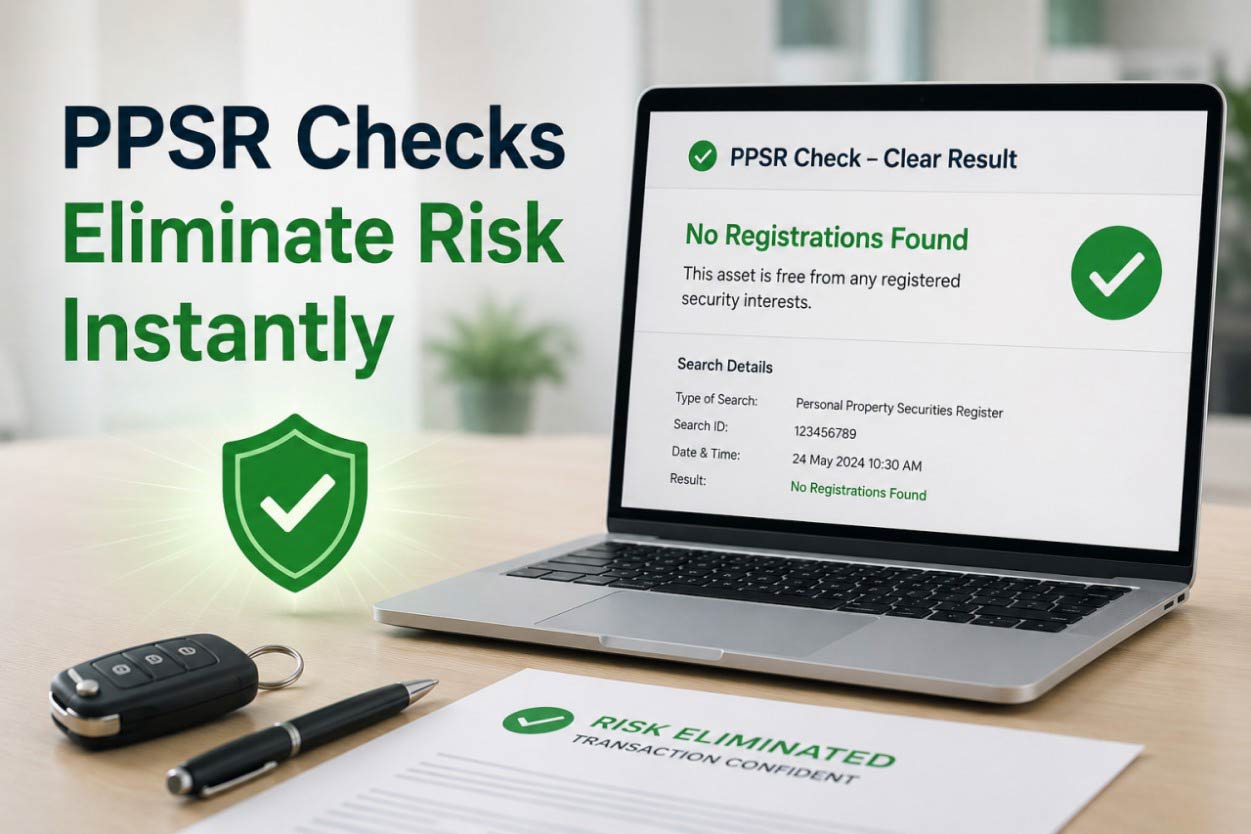
Buying a second-hand vehicle or asset in Australia should be exciting, not stressful. But without the right checks in place, you could unknowingly take on someone else’s debt. PPSR Asset Check makes it straightforward to verify whether an asset carries any registered financial interests before you hand over a single dollar. One quick search can save you thousands and protect your purchase from day one.
Key Takeaways
- A PPSR check reveals whether a vehicle or asset has finance, write-off history, or a stolen status.
- Buying an encumbered asset means a lender may legally repossess it from you, even if you paid in good faith.
- PPSR checks apply to cars, boats, motorbikes, trailers, caravans, and other personal property.
- Results are delivered almost instantly, making a check the simplest step you can take before any second-hand purchase.
- The PPSR is administered by the Australian Financial Security Authority (AFSA) and is the authoritative national register.
What Is the PPSR and Why Does It Exist?
The Personal Property Securities Register, commonly known as the PPSR, is Australia’s national online database for recording security interests over personal property. It was established under the Personal Property Securities Act 2009 (Cth) and is managed by the Australian Financial Security Authority (AFSA).
In plain terms, when a lender provides finance for a vehicle or asset, they register their interest on the PPSR. That registration means if the borrower defaults or sells the asset without repaying the debt, the lender retains the legal right to reclaim the property, from whoever owns it at the time.
That last part is the critical bit. It does not matter that you paid market value in good faith. If the PPSR shows a registered security interest and the original borrower defaults, you could lose the asset.
The Real Cost of Skipping a PPSR Check
Australians purchase hundreds of thousands of used vehicles each year. A significant portion of those transactions involve assets that have outstanding finance the seller has not disclosed.
Buyers should verify whether finance is owing on a vehicle before purchase. A PPSR check is the only reliable method to do this through the official national register.
What is actually at stake when you skip this step?
- You may inherit a debt you did not create or agree to
- The lender can legally repossess the vehicle or asset from you
- You lose both the asset and the money you paid for it
- Resolving the dispute through legal channels is time-consuming and costly
- Private sellers are not obligated to disclose outstanding finance unless directly asked
Uninformed buyers remain the most vulnerable group in private vehicle sales, with financial encumbrances among the most commonly undisclosed issues.
What a PPSR Check Actually Reveals
A thorough PPSR search surfaces several types of critical information that you simply cannot see from a visual inspection or a test drive:
- Registered Security Interests (Finance): Whether a lender has a recorded claim over the asset due to unpaid finance
- Written-Off Status: Whether the vehicle has been assessed as a total loss following an accident or flood event
- Stolen Vehicle Status: Whether the asset has been reported stolen through relevant Australian databases
- Encumbrance Details: The type of security interest and in some cases identifying information about the financier
- VIN and Identifier Matching: Confirmation that the vehicle identification matches the registered details on the PPSR
Understanding how to read your results is just as important as running the search. PPSR search results guide at PPSR Asset Check explains exactly what each field in your report means so you can make an informed decision.
Which Assets Can You Check?
The PPSR covers all forms of personal property, which under Australian law includes vehicles and a broad range of other moveable assets. This is an important distinction, many buyers assume PPSR checks are only relevant for cars. That is not the case.
Assets you can and should check include:
- Used cars and utes
- Motorbikes and scooters
- Boats, jet skis, and watercraft
- Caravans and camper trailers
- Trailers and plant equipment
- Heavy machinery and commercial vehicles
For anything with a motor, hull, or serial number, running a search is straightforward. PPSR car check service at PPSR Asset Check is designed specifically for passenger and light commercial vehicles, delivering instant results with a full PDF report you can keep for your records.
How the PPSR Search Process Works
Many people assume running a PPSR check is complicated. It takes under two minutes from start to finish.
Here is what the process looks like in practice:
- Step 1 — Locate the VIN or serial number: For vehicles, the VIN is found on the compliance plate, dashboard, or door jamb. For other assets, use the manufacturer’s serial number.
- Step 2 — Enter the identifier: Input the VIN or serial number into the search tool. Double-check every character, a single digit error will return an inaccurate result.
- Step 3 — Receive your report: Results are delivered almost instantly with a downloadable PDF confirming the asset’s PPSR status.
- Step 4 — Review before you pay: If the report shows a clear result, you can proceed with confidence. If it shows registered interests, investigate further before transferring any funds.
Research published by Monash University’s transport safety research unit reinforces that pre-purchase due diligence, including financial checks, reduces the likelihood of post-purchase disputes and associated consumer detriment across all vehicle categories.
VIN vs Rego: Which Should You Use?
A common point of confusion for buyers is whether to search by VIN number or registration plate. Both can be used, but they serve different purposes and have different levels of reliability.
A VIN search queries the PPSR directly using the vehicle’s permanent identifier. A rego search cross-references the registration plate, which can change when a vehicle is re-registered or transferred between states.
For the most accurate and thorough result, searching by VIN is always the recommended approach. VIN vs Rego check explainer covers the practical differences between both methods and helps you choose the right search type for your situation.
VIN-based searches return the most consistent results, especially for vehicles that have been re-registered across state lines.
When to Run a PPSR Check
The right time to run a PPSR check is before you make any financial commitment. Not after you have shaken hands. Not after you have paid a deposit. Before.
This includes private sales, dealer purchases for older stock, auction purchases, and any situation where the asset’s financial history is not documented through a formal dealership warranty process.
Consumers should conduct a PPSR check as a baseline step before signing any purchase agreement, regardless of how trustworthy the seller appears.
Encumbered vehicles remain among the top three consumer complaints received following private car sales, with most cases involving buyers who did not run a PPSR search beforehand.
What Happens If the Check Shows a Security Interest?
Finding a registered security interest does not automatically mean you should walk away. It means you need more information before proceeding.
Here are the practical steps to take if your report shows an encumbrance:
- Ask the seller to provide written evidence that the finance has been paid out
- Request a letter of discharge from the financier directly
- Contact the financier listed in the PPSR results and confirm the current status
- If the seller cannot provide documentation, consider withdrawing from the sale
- Never transfer payment until the security interest is formally discharged and confirmed on the register
Most consumer disputes involving encumbered assets could have been avoided entirely with a pre-purchase PPSR search and appropriate follow-up prior to settlement.
Conclusion
Protecting yourself from financial loss when buying second-hand assets does not require legal expertise or hours of research. A PPSR check takes minutes and delivers instant clarity on what you are actually buying. Before you commit to your next purchase, run the search first. Contact us if you have any questions about your results or which check is right for your situation.
FAQs:
What does a PPSR check show?
It shows whether an asset has registered finance, is written off, has stolen-vehicle flags, or has other security interests recorded against it.
Is a PPSR check the same as a vehicle history report?
No. A PPSR check specifically searches the national register for security interests. Other checks may include odometer and accident history.
Can I be forced to return a car I bought without a PPSR check?
Yes. If the vehicle has a registered security interest and the original borrower defaults, the lender may legally repossess it from you.
How much does a PPSR check cost in Australia?
Fees are low, and results are delivered almost instantly via a PDF report with full PPSR status details.
Do I need to run a PPSR check if buying from a licensed dealer?
Licensed dealers are obligated to sell vehicles free of encumbrances, but a PPSR check provides independent confirmation and peace of mind.
How do I find the VIN number to run a PPSR check?
The VIN is located on the dashboard near the windscreen, the door jamb sticker, or on the vehicle compliance plate under the bonnet.