Shocking Truths a PPSR Vehicle Check Can Reveal Instantly
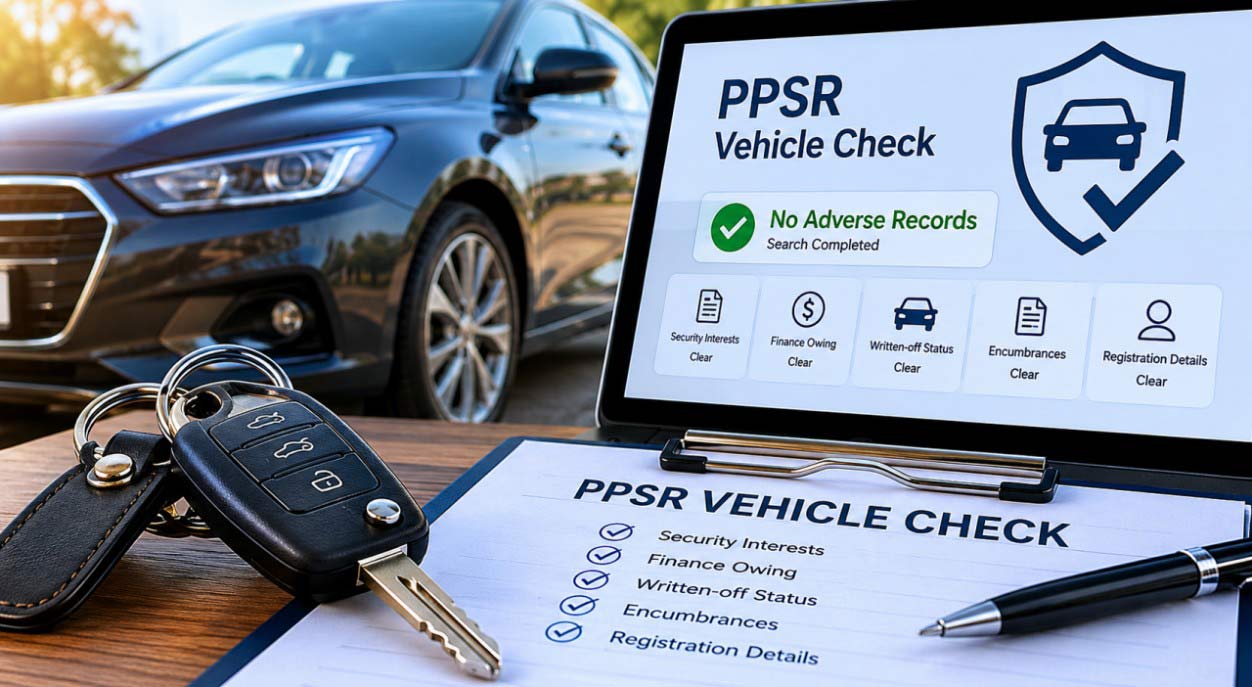
You found a great deal on a used vehicle. The seller seems trustworthy. The car looks clean. But what you cannot see could cost you far more than the asking price. From undisclosed finance to hidden write-off histories, the risks are real and immediate. PPSR Asset Check gives you access to the facts that matter, within seconds of entering a VIN.
Key Takeaways
- A PPSR vehicle check can reveal outstanding finance, write-off history, and stolen vehicle status in under two minutes.
- Buying a vehicle with undisclosed finance does not protect you, the lender’s repossession rights follow the asset, not the buyer.
- Write-off categories matter, a repairable write-off that has been repaired carries a permanently changed legal status in Australia.
- The PPSR is the only nationally recognised register for security interests and is the authoritative source for financial encumbrance data.
Truth 1: Outstanding Finance That the Seller Never Mentioned
This is the most common and most costly revelation a PPSR check delivers. When a vehicle is purchased on finance, the lender registers their security interest on the Personal Property Securities Register. That registration stays active until the debt is fully paid out and formally discharged.
If the owner sells the vehicle before paying off the loan, the registered interest does not disappear. It travels with the asset. So when you buy that vehicle and the original borrower later defaults on their repayments, the lender has a legal right to reclaim the vehicle, regardless of the fact that you paid for it.
Recent PPSR statistics on vehicle security interests in Australia consistently show that a large portion of used vehicle listings still carry active financial encumbrances, highlighting how common it is for buyers to unknowingly purchase vehicles with existing debt attached.
It is also important to understand that vehicle history reports complement PPSR checks by providing additional background such as accident records, ownership changes, odometer inconsistencies, and insurance write-off indicators, helping buyers form a more complete picture before purchasing.
Truth 2: A Written-Off History That Changes the Vehicle’s Legal Status
A vehicle that has been assessed as a total loss following an accident, flood, or storm event receives a statutory write-off classification. In Australia, there are two categories, repairable write-offs and statutory write-offs, and the distinction matters significantly to buyers.
- Statutory Write-Off: This vehicle is deemed beyond economic or safe repair. It cannot be re-registered for road use in Australia. It can only be used for parts.
- Repairable Write-Off: This vehicle was assessed as a total loss for insurance purposes but can potentially be repaired and re-registered after passing a thorough inspection. Once repaired, it carries a permanently changed title in most states.
Buyers should check whether a vehicle carries a write-off notation before purchase, as this information directly affects both the vehicle’s roadworthiness status and its resale value.
A seller is not always required to proactively disclose write-off history. Without a formal check, you may not find out until you attempt to insure or resell the vehicle.
Truth 3: A Stolen Vehicle Listing That Makes the Sale Unlawful
Purchasing a stolen vehicle, even unknowingly, puts you in a deeply problematic position under Australian law. The vehicle can be seized by police and returned to its rightful owner. You receive no compensation and bear the full financial loss of whatever you paid.
A PPSR vehicle check cross-references stolen vehicle databases to flag assets that have been reported as stolen through relevant Australian authorities. This is information you cannot obtain from a test drive, a mechanical inspection, or even from the seller’s registration papers.
Vehicle rebirthing, where stolen vehicles are given false identities using parts from legitimately registered wrecks, remains an active problem in Australian private vehicle markets, with buyers being the party who absorbs the loss when vehicles are recovered.
Truth 4: Identity Discrepancies That Signal a Deeper Problem
When you enter a VIN into a PPSR search, the result also returns information about how that identifier has been registered. If the details returned do not match the vehicle in front of you, that is a serious warning sign.
Discrepancies between the PPSR result and the physical vehicle may indicate:
- The VIN plate has been tampered with or replaced
- The vehicle has been rebirthed using another vehicle’s identity
- The seller’s registration papers do not correspond to the actual vehicle being sold
- The vehicle may have been imported and not correctly registered under Australian standards
Any inconsistency between the physical VIN and the information returned in your search result should be treated as a reason to pause the transaction immediately and seek further investigation before proceeding.
PPSR boat search service at PPSR Asset Check applies the same identity verification process to watercraft, where hull identification numbers serve the same function as VINs on road vehicles and carry the same repossession risk if a security interest is active.
Truth 5: Multiple Security Interests Registered Against One Vehicle
It is possible, though less common, for more than one security interest to be registered against a single asset. This can occur when a vehicle has changed hands multiple times with finance attached, or when the same vehicle has been used as collateral for different financial arrangements.
When multiple interests appear in a PPSR result, priority rules under the Personal Property Securities Act determine which lender’s claim takes precedence. As a buyer, you are not expected to understand these legal nuances, but you are expected to investigate before completing the purchase.
Priority disputes between competing secured parties are resolved through the register, but only after the buyer has already taken possession of the encumbered asset, meaning the practical risk falls disproportionately on uninformed buyers.
Truth 6: The Asset May Already Be Subject to Court Orders or Other Legal Encumbrances
Beyond standard finance agreements, the PPSR can also capture certain court-ordered security arrangements and other legal encumbrances that affect the asset. These situations are less frequent, but they carry the same implication for buyers: the asset is not free and clear.
This is a particularly relevant consideration for buyers purchasing assets from businesses in financial distress, sole traders facing insolvency proceedings, or sellers who have recently gone through legal disputes involving property or debt.
The PPSR provides a searchable, publicly accessible record of these interests precisely so that buyers can conduct due diligence before committing to a transaction.
How to Act on What Your PPSR Check Reveals
Knowing what a PPSR result means is only valuable if you respond to it appropriately. Here is how to act on the most common findings:
- Finance Registered and Active: Ask the seller for a payout letter from the financier and confirm the interest has been discharged on the register before settlement
- Write-Off Notation Present: Obtain the full write-off history and confirm the vehicle’s current registration and roadworthiness status through the relevant state authority
- Stolen Vehicle Flag: Do not proceed with the purchase. Contact police to report what you have found and do not transfer any funds
- VIN Discrepancy: Do not proceed until the seller can provide a satisfactory explanation supported by documentation. Consider engaging an independent inspector
- Multiple Interests Listed: Obtain legal advice on priority and ensure all interests are formally discharged before proceeding
Protecting yourself when buying a second-hand vehicle reinforces that acting on PPSR results, rather than simply noting them and proceeding anyway, is what determines whether the check actually protects you.
Why a PPSR Check Belongs at the Start of Every Used Vehicle Transaction
Many buyers treat a PPSR search as a final formality before handing over money. The smarter approach is to run it at the very beginning of your decision-making process, before any deposit, before any emotional commitment, and before you have told the seller you want to buy.
Running the check early gives you complete freedom to walk away if the result warrants it. It also establishes your footing as an informed buyer, which changes the dynamic of any negotiation that follows.
Academic research from Curtin University’s business and law faculty on consumer decision-making in asset markets found that buyers who conduct formal pre-purchase verification are significantly less likely to report post-purchase regret or financial loss in second-hand asset markets, regardless of asset category.
Conclusion
Every second-hand vehicle purchase carries risk. But that risk becomes entirely manageable once you have the facts. A PPSR vehicle check takes under two minutes and delivers information that no test drive or inspection ever could. Before you commit to your next purchase, run the search first. Reach out to us if you need guidance on your results or which search suits your asset type.
FAQs:
Can a PPSR check reveal if a car has been written off?
Yes. A PPSR vehicle check can flag write-off notations, including both repairable and statutory write-off classifications relevant to Australian law.
What happens if I unknowingly buy a stolen vehicle in Australia?
The vehicle can be seized by police and returned to its owner. You bear the full financial loss with no compensation available.
How do I know if a car I want to buy has outstanding finance?
Run a PPSR vehicle check using the VIN. Active security interests registered by lenders will appear clearly in your results report.
What is a repairable write-off and can it be re-registered?
A repairable write-off is an insurance total loss that may be repaired and re-registered after a formal inspection in most Australian states.
Is a PPSR check legally required before buying a used car in Australia?
No, it is not legally required. However, it is strongly recommended and widely considered standard due diligence before any private vehicle purchase.
Can a PPSR check reveal more than one security interest on a vehicle?
Yes. Multiple active interests can appear on a single asset, each requiring individual investigation and discharge before purchase is safe.